
Introduction
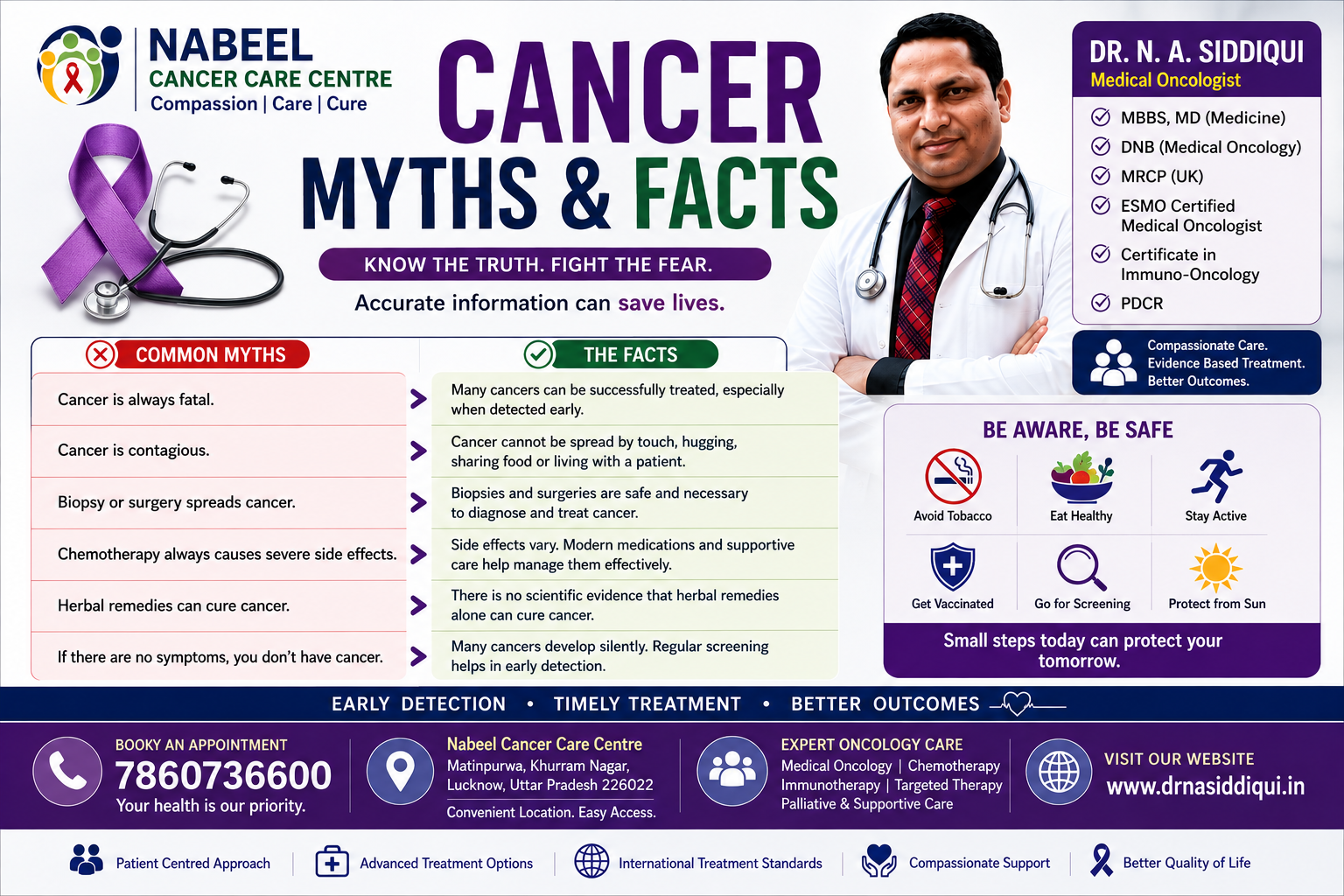
Cancer is one of the most discussed health conditions worldwide, yet it remains surrounded by myths, misconceptions, and misinformation. These myths can create unnecessary fear, delay medical consultation, and sometimes prevent patients from receiving timely treatment.
As a Cancer Doctor in Lucknow, Dr. N. A. Siddiqui frequently encounters patients and families who have questions based on information heard from friends, social media, or unverified online sources.
Understanding the difference between myths and facts is essential for making informed healthcare decisions. This article addresses some of the most common misconceptions about cancer and provides evidence-based information to help patients better understand the disease.
Meet Dr. N. A. Siddiqui
Dr. N. A. Siddiqui is a Medical Oncologist providing comprehensive cancer care in Lucknow.
Qualifications
- MBBS
- MD (Medicine)
- DNB (Medical Oncology)
- MRCP (UK)
- ESMO Certified Medical Oncologist
- Certificate in Immuno-Oncology
- PDCR
At Nabeel Cancer Care Centre, patients receive personalized cancer care, chemotherapy, immunotherapy, targeted therapy, supportive care, and evidence-based oncology consultation.
Why Cancer Awareness Matters
Misinformation can be dangerous when it affects health decisions.
Believing cancer myths may lead to:
- Delayed diagnosis
- Delayed treatment
- Increased anxiety
- Avoidance of screening
- Poor treatment compliance
- Unrealistic expectations
Accurate information empowers patients to seek appropriate medical advice and treatment.
Myth 1: Cancer Is Always Fatal
Fact
Cancer is not always fatal.
Many cancers can be successfully treated, especially when detected early. Advances in medical oncology, surgery, radiation therapy, targeted therapy, immunotherapy, and supportive care have significantly improved outcomes for many patients.
Early diagnosis often provides more treatment options and better long-term results.
Myth 2: Cancer Is Contagious
Fact
Cancer cannot be spread from one person to another through:
- Touching
- Hugging
- Sharing food
- Living together
- Caring for a patient
Family members and caregivers can safely support and spend time with cancer patients.
Myth 3: A Cancer Diagnosis Means Immediate Death
Fact
A cancer diagnosis does not mean immediate death.
Many patients continue working, caring for their families, and enjoying meaningful lives while undergoing treatment.
Outcomes depend on factors such as:
- Cancer type
- Stage of disease
- Overall health
- Response to treatment
Each patient's journey is unique.
Myth 4: Cancer Treatment Is Worse Than Cancer
Fact
Cancer treatments can cause side effects, but modern oncology has significantly improved supportive care.
Many side effects can now be managed through:
- Anti-nausea medications
- Nutritional support
- Pain management
- Symptom monitoring
- Personalized treatment planning
The goal is to maximize treatment effectiveness while maintaining quality of life.
Myth 5: Chemotherapy Always Causes Severe Side Effects
Fact
Not all chemotherapy treatments cause the same side effects.
Many patients tolerate chemotherapy well and continue their routine activities with appropriate medical support.
Side effects vary depending on:
- Drug type
- Dosage
- Treatment schedule
- Individual health factors
Supportive medications have improved significantly in recent years.
Myth 6: Hair Loss Happens With Every Cancer Treatment
Fact
Hair loss is not universal.
Some chemotherapy drugs may cause hair loss, while others do not.
Many treatments such as:
- Immunotherapy
- Targeted therapy
- Hormone therapy
may not cause significant hair loss.
Patients should discuss expected side effects with their oncologist before treatment begins.
Myth 7: Cancer Is Always Hereditary
Fact
While some cancers have a genetic component, most cancers are not directly inherited.
Risk factors may include:
- Tobacco use
- Alcohol consumption
- Obesity
- Infections
- Environmental exposures
- Age
Family history is important but is only one part of the overall risk assessment.
Myth 8: Sugar Directly Causes Cancer
Fact
There is no evidence that eating sugar directly causes cancer.
However, excessive sugar intake may contribute to obesity, which is a known risk factor for several cancers.
A balanced diet remains an important part of overall health.
Myth 9: Positive Thinking Alone Can Cure Cancer
Fact
A positive attitude can improve emotional well-being and help patients cope with treatment, but cancer requires appropriate medical evaluation and evidence-based treatment.
Emotional support should complement—not replace—medical care.
Myth 10: Cancer Surgery Causes Cancer to Spread
Fact
This is one of the most common misconceptions.
Cancer surgery performed by trained specialists follows strict medical protocols designed to remove cancer safely.
Surgery remains an important treatment option for many cancers and is not generally considered a cause of cancer spread.
Myth 11: Only Smokers Get Cancer
Fact
Smoking is a major risk factor for several cancers, but cancer can also occur in people who have never smoked.
Cancer risk may be influenced by:
- Genetics
- Environmental exposure
- Infections
- Lifestyle factors
- Age
- Occupational hazards
For example, some non-smokers may still develop lung cancer due to genetic mutations or exposure to pollutants.
Myth 12: If You Have No Symptoms, You Cannot Have Cancer
Fact
Many cancers develop silently and may not cause symptoms in their early stages.
Examples include:
- Colon Cancer
- Ovarian Cancer
- Kidney Cancer
- Liver Cancer
- Lung Cancer
This is why regular health check-ups and cancer screening are important for eligible individuals.
Myth 13: Cancer Only Affects Older People
Fact
Cancer is more common with increasing age, but it can occur at any age.
Children, teenagers, young adults, and middle-aged individuals can also develop cancer.
Early recognition of symptoms and timely medical evaluation remain important regardless of age.
Myth 14: Herbal Remedies Can Cure Cancer
Fact
There is currently no scientific evidence that herbal remedies alone can cure cancer.
Some herbal products may interact with cancer medications and affect treatment outcomes.
Patients should always discuss supplements, herbal products, and alternative therapies with their oncologist before using them.
Myth 15: Biopsy Causes Cancer to Spread
Fact
A biopsy is one of the most important diagnostic tools in cancer care.
It helps doctors:
- Confirm diagnosis
- Identify cancer type
- Determine treatment options
- Plan personalized care
Modern biopsy techniques are considered safe and are routinely performed worldwide.
Myth 16: Cancer Is a Single Disease
Fact
Cancer is not one disease.
There are more than 100 different types of cancer, including:
Each cancer behaves differently and may require a unique treatment approach.
Myth 17: Immunotherapy Works for Everyone
Fact
Immunotherapy has transformed cancer treatment for many patients, but it is not suitable for every cancer type or every patient.
Treatment decisions depend on:
- Cancer type
- Molecular testing
- Biomarker status
- Overall health
- Previous treatments
A medical oncologist determines whether immunotherapy is appropriate for a particular patient.
Myth 18: Targeted Therapy Has No Side Effects
Fact
Targeted therapy is often designed to act on specific cancer-related pathways, but side effects can still occur.
Possible side effects vary depending on the medication and may include:
- Fatigue
- Skin changes
- Diarrhea
- Blood pressure changes
- Liver function abnormalities
Patients should remain under regular medical supervision during treatment.
Myth 19: Cancer Cannot Be Prevented
Fact
While not all cancers can be prevented, many risk factors can be reduced.
Important preventive measures include:
- Avoiding tobacco
- Limiting alcohol
- Maintaining a healthy weight
- Exercising regularly
- Eating a balanced diet
- Receiving recommended vaccinations
- Participating in cancer screening programs
Prevention and early detection play an important role in reducing cancer burden.
Myth 20: Cancer Screening Is Only Necessary When Symptoms Appear
Fact
The purpose of screening is to detect cancer before symptoms develop.
Screening may help identify:
- Early-stage cancer
- Precancerous changes
- Individuals at increased risk
Recommended screening varies based on age, sex, and personal risk factors.
Myth 21: Mobile Phones Directly Cause Cancer
Fact
Current scientific evidence has not established that normal mobile phone use directly causes cancer.
Research in this area continues, and international health organizations regularly review available data.
Patients should rely on information from trusted medical sources rather than social media rumors.
Myth 22: Cancer Treatment Means You Cannot Live Normally
Fact
Many cancer patients continue to:
- Work
- Travel
- Exercise
- Spend time with family
- Pursue hobbies
Treatment plans are increasingly personalized, and supportive care helps many patients maintain daily activities.
Myth 23: All Tumors Are Cancer
Fact
Not all tumors are cancerous.
Tumors can be:
Benign
Non-cancerous growths that usually do not spread.
Malignant
Cancerous growths that may invade nearby tissues or spread to other parts of the body.
Accurate diagnosis requires medical evaluation and often imaging and biopsy.
Myth 24: A Family History Guarantees Cancer
Fact
A family history may increase risk, but it does not guarantee that a person will develop cancer.
Many individuals with a family history never develop cancer, while many cancer patients have no family history at all.
Risk assessment should be individualized.
Why Trust Evidence-Based Cancer Information?
The internet contains both reliable and unreliable information.
Patients should seek guidance from qualified healthcare professionals and trusted medical organizations.
Evidence-based information helps patients:
- Make informed decisions
- Avoid unnecessary fear
- Understand treatment options
- Participate actively in care
Cancer Awareness and Education at Nabeel Cancer Care Centre
At Nabeel Cancer Care Centre, Dr. N. A. Siddiqui believes that patient education is an essential part of cancer care.
The goal is to help patients and families:
- Understand cancer
- Recognize symptoms
- Learn about treatment options
- Improve treatment adherence
- Reduce anxiety caused by misinformation
Accurate information empowers patients throughout their cancer journey.
Frequently Asked Questions (FAQs)
1. What are the most common cancer myths?
Some common myths include:
- Cancer is always fatal
- Cancer is contagious
- Surgery spreads cancer
- Biopsy spreads cancer
- Sugar directly causes cancer
- Herbal remedies can cure cancer
2. Is cancer always fatal?
No. Many cancers can be treated successfully, especially when detected early and managed with appropriate medical care.
3. Can cancer spread through touch?
No. Cancer is not contagious and cannot spread through touching, hugging, sharing food, or living with a cancer patient.
4. Does biopsy cause cancer to spread?
No. Biopsies are safe diagnostic procedures used worldwide to diagnose cancer and guide treatment decisions.
5. Can surgery make cancer spread?
No. Cancer surgery is a standard treatment option and is performed using established medical techniques designed to safely remove cancer.
6. Does sugar feed cancer?
All cells in the body use glucose for energy. Eating sugar does not directly cause cancer, though maintaining a healthy diet is important for overall health.
7. Can herbal remedies cure cancer?
There is no scientific evidence that herbal remedies alone can cure cancer. Patients should consult their oncologist before using supplements or alternative therapies.
8. Is chemotherapy always painful?
No. Modern chemotherapy is supported by medications and supportive care that help manage many side effects effectively.
9. Do all cancer patients lose their hair?
No. Hair loss depends on the specific treatment being used. Not all chemotherapy drugs cause hair loss, and many targeted therapies and immunotherapies do not.
10. Can young people get cancer?
Yes. Although cancer is more common in older adults, it can occur at any age.
11. Is cancer hereditary?
Some cancers have hereditary components, but most cancers are not directly inherited.
12. Can cancer be prevented?
Not all cancers can be prevented, but healthy lifestyle choices and cancer screening can help reduce risk.
13. Does smoking increase cancer risk?
Yes. Tobacco use is one of the leading preventable causes of cancer worldwide.
14. Is screening important even without symptoms?
Yes. Screening aims to detect cancer before symptoms develop.
15. Is immunotherapy suitable for every cancer patient?
No. Eligibility depends on cancer type, stage, biomarkers, and other medical factors.
16. What is the best way to verify cancer-related information?
Consult qualified healthcare professionals and trusted medical organizations rather than relying solely on social media or unverified sources.
Conclusion
Cancer myths can create fear, confusion, and delays in seeking medical care. Understanding the facts helps patients make informed decisions and access timely treatment. Whether it is a misconception about chemotherapy, surgery, biopsy, immunotherapy, or cancer prevention, relying on evidence-based information is essential.
As a trusted Cancer Doctor in Lucknow, Dr. N. A. Siddiqui believes that patient education is a vital part of cancer care. Through awareness, early detection, regular screening, and modern treatment approaches, many cancers can be managed more effectively.
At Nabeel Cancer Care Centre, patients receive personalized guidance, accurate information, and comprehensive oncology care designed to support them at every stage of their cancer journey.
Book an Appointment
If you have concerns about cancer symptoms, treatment options, prevention strategies, or would like a second opinion, consult Dr. N. A. Siddiqui, Medical Oncologist at Nabeel Cancer Care Centre, Lucknow.