
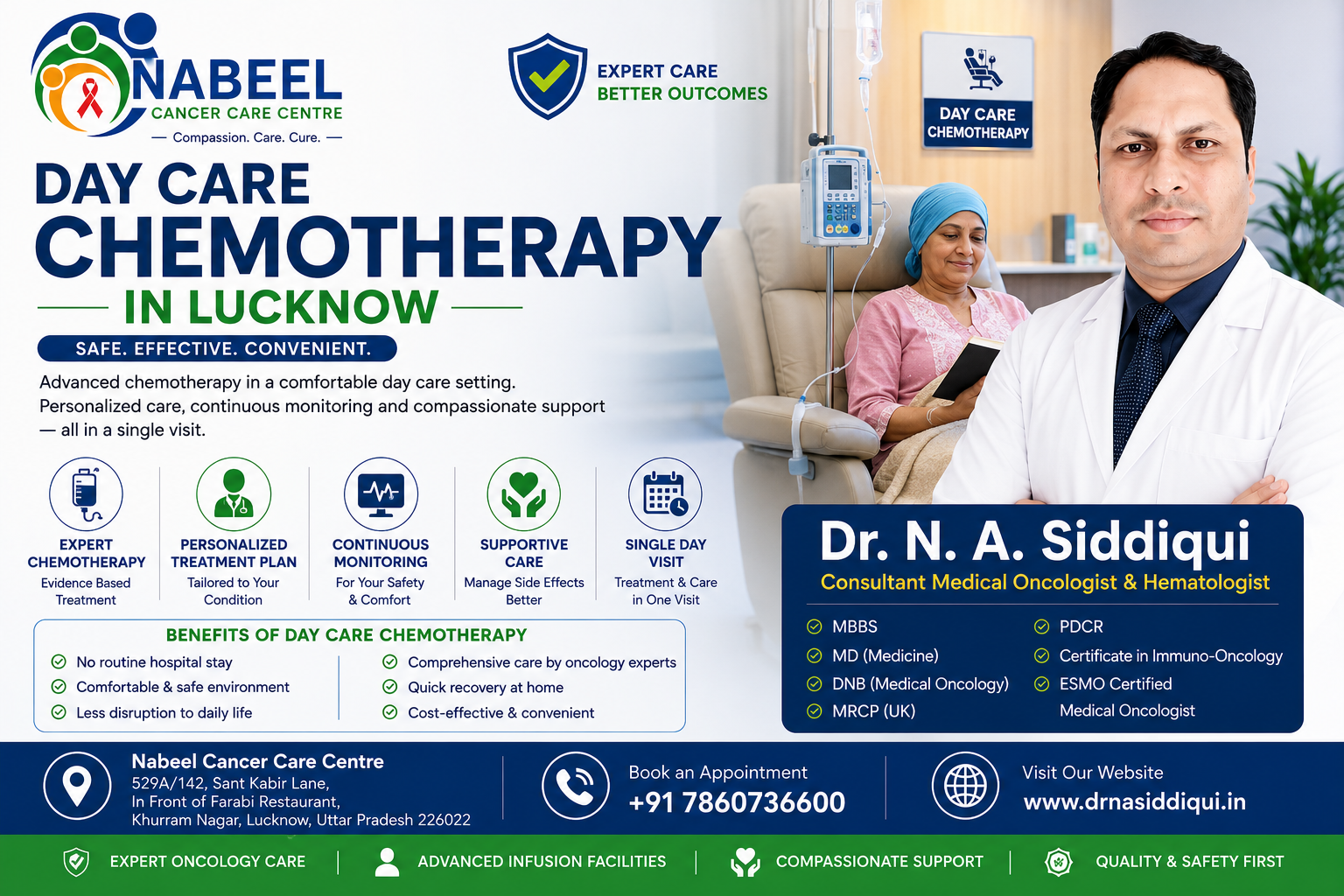
Day Care Chemotherapy in Lucknow – Dr. N. A. Siddiqui
Chemotherapy does not always require a patient to remain admitted to a hospital overnight. Many chemotherapy regimens can be administered in a day-care or outpatient oncology setting, where the patient arrives for planned treatment, undergoes the required safety checks, receives chemotherapy under medical supervision and may return home on the same day if clinically stable.
If you are looking for Day Care Chemotherapy in Lucknow, Dr. N. A. Siddiqui, Consultant Medical Oncologist & Hematologist, provides personalized chemotherapy consultation and treatment planning for patients with different solid tumors and blood cancers.
Whether chemotherapy can be given in a day-care setting depends on several factors, including the chemotherapy regimen, infusion duration, cancer type, blood-test results, previous treatment reactions, other medical conditions and the patient's overall clinical condition.
Day-care chemotherapy should therefore not be understood as simply “quick chemotherapy.” It is a structured oncology treatment pathway designed for appropriately selected patients who do not require overnight hospital admission.
What Is Day Care Chemotherapy?
Day care chemotherapy refers to chemotherapy administered in a hospital or oncology day unit without a planned overnight stay.
The patient typically arrives at the treatment facility on the scheduled day, completes pre-treatment assessment, receives the prescribed anti-cancer medicines and remains under observation as required before being discharged.
The National Cancer Institute notes that chemotherapy may be given during a hospital stay, at home or as an outpatient in a clinic or hospital. In outpatient treatment, the patient does not stay overnight.
Day-care oncology units may provide intravenous chemotherapy and, depending on the centre and treatment plan, other systemic anti-cancer treatments.
The important principle is that the same standards of treatment planning, medication verification, monitoring and side-effect management are required whether chemotherapy is given as a day case or during hospital admission.
Day Care Chemotherapy vs Inpatient Chemotherapy
The chemotherapy medicine itself is not necessarily different because treatment is described as “day care.”
The main difference is the need for hospital admission.
Day Care Chemotherapy
The patient:
- Comes to the treatment facility
- Is assessed before treatment
- Receives chemotherapy
- Is monitored during treatment
- Goes home the same day if medically stable
Inpatient Chemotherapy
The patient remains admitted for at least one night or longer.
Inpatient treatment may be required for certain chemotherapy protocols, prolonged infusions, intensive monitoring requirements, significant complications or other clinical reasons.
Major oncology centres report that most systemic anti-cancer treatments can be delivered as day treatment, while selected patients require inpatient admission because of the duration or nature of the treatment.
The oncologist decides which setting is safest and most appropriate.
Who Can Receive Chemotherapy as a Day-Care Patient?
Not every patient receiving chemotherapy automatically qualifies for same-day treatment.
Before each treatment cycle, the oncology team considers whether it is safe to proceed.
Factors may include:
- Type of cancer
- Chemotherapy regimen
- Dose and treatment schedule
- Blood counts
- Kidney function
- Liver function
- Heart function where relevant
- Existing medical conditions
- Previous chemotherapy tolerance
- Current symptoms
- Infection risk
- Performance status
- Need for prolonged hydration
- Previous infusion reactions
A patient who received chemotherapy as a day-care treatment during one cycle may still need additional evaluation or hospital admission later if their condition changes.
Safety takes priority over convenience.
Which Cancers May Be Treated With Day Care Chemotherapy?
Many commonly used chemotherapy regimens can potentially be administered in a day-care setting when clinically appropriate.
These may include treatment for selected patients with:
- Breast cancer
- Lung cancer
- Colon cancer
- Rectal cancer
- Ovarian cancer
- Stomach cancer
- Pancreatic cancer
- Gallbladder cancer
- Head and neck cancer
- Oral cancer
- Prostate cancer
- Bladder cancer
- Lymphoma
- Multiple myeloma
- Other solid tumors and hematological cancers
However, the cancer diagnosis alone does not determine whether day-care treatment is suitable.
For example, two patients with breast cancer may receive entirely different chemotherapy combinations and infusion schedules.
Treatment planning must therefore be individualized.
What Happens Before Starting Chemotherapy?
Before the first chemotherapy cycle, a medical oncologist reviews the diagnosis and creates an individualized treatment plan.
This assessment may include:
- Biopsy and histopathology review
- Cancer stage
- Previous surgery or radiation
- Previous cancer treatments
- CT, MRI or PET-CT findings where relevant
- Blood investigations
- Kidney and liver function
- Heart assessment for selected medicines
- Other medical conditions
- Current medications
- Treatment goals
The oncologist also determines:
- Which chemotherapy medicines will be used
- Drug doses
- Number of treatment cycles
- Treatment interval
- Whether treatment is curative, adjuvant, neoadjuvant or for disease control
- Supportive medicines required
- Monitoring schedule
Chemotherapy selection depends mainly on the type and extent of cancer, previous chemotherapy and the patient's general health and other medical problems.
Day Care Chemotherapy Process: What to Expect
Patients often feel less anxious when they know what is likely to happen on treatment day.
Although the exact process varies according to the treatment protocol and facility, a typical day-care chemotherapy visit may involve the following steps.
1. Pre-Treatment Blood Tests
Blood investigations are commonly required before chemotherapy.
These may include:
- Complete blood count
- Hemoglobin
- White blood-cell count
- Neutrophil count
- Platelet count
- Kidney-function tests
- Liver-function tests
- Other treatment-specific tests
Major chemotherapy day units routinely perform or review blood tests before treatment because results help determine whether treatment can proceed safely.
If blood counts or organ-function results are not within an acceptable range, chemotherapy may sometimes need to be delayed, adjusted or reassessed.
2. Clinical Assessment
The patient may be asked about:
- Fever
- Infection
- Vomiting or diarrhea
- Eating and drinking
- New medications
- Previous chemotherapy side effects
- Numbness or tingling
- Breathlessness
- Pain
- Other new symptoms
Patients should report symptoms honestly rather than trying to hide them to avoid treatment delay.
A delay recommended for safety does not mean that treatment has failed.
3. Vital-Sign Monitoring
Before treatment, healthcare staff may check:
- Weight
- Blood pressure
- Pulse
- Temperature
- Oxygen saturation
- Breathing rate where appropriate
Weight can be particularly relevant because chemotherapy doses for some regimens are calculated partly from body size.
4. Intravenous Access
Many chemotherapy medicines are given through a vein.
Treatment may be administered through:
- Peripheral IV cannula
- PICC line
- Implanted venous port
- Another appropriate central venous access device
The best option depends on the medicines being used, treatment duration, vein condition and expected number of cycles.
Not every patient needs a chemotherapy port.
5. Pre-Medications
Before chemotherapy, patients may receive medicines designed to reduce certain treatment-related problems.
Depending on the regimen, these can include medicines to help prevent:
- Nausea and vomiting
- Allergic or infusion reactions
- Other predictable side effects
The pre-medication plan is specific to the chemotherapy regimen.
6. Chemotherapy Infusion
Once the oncologist has confirmed that treatment can proceed, the prescribed medicines are administered according to the planned protocol.
Chemotherapy may be given:
- As a short injection
- Through an IV infusion
- Through sequential infusions of several medicines
Treatment duration varies considerably.
Some treatments are relatively short, while others may take several hours. Cancer day units specifically advise patients that treatment times differ substantially according to the medicines prescribed.
7. Monitoring During Treatment
Healthcare staff monitor the patient during chemotherapy.
Patients should immediately report symptoms such as:
- Sudden breathlessness
- Chest tightness
- Severe itching
- Rash
- Dizziness
- Chills
- Pain or burning around the IV site
- Sudden nausea
- Any unusual sensation
Certain chemotherapy medicines can cause infusion reactions, which is why supervised administration is important.
8. Discharge and Home Instructions
If the treatment is completed without a reason for further observation or admission, the patient may return home.
Before leaving, patients should understand:
- Which medicines to take at home
- When the next cycle is scheduled
- When blood tests are required
- Which side effects are expected
- Which symptoms require an urgent call
- How to contact the oncology team when needed
How Long Does Day Care Chemotherapy Take?
There is no fixed duration.
A common misconception is that every day-care chemotherapy session lasts only one or two hours.
In reality, total time may include:
- Registration
- Blood testing
- Waiting for results
- Medical review
- Treatment authorization
- Drug preparation
- Pre-medications
- Chemotherapy infusion
- Observation afterward
The actual treatment may be short for one patient and several hours for another.
Chemotherapy medicines are often prepared specifically according to the patient's prescription and clinical approval, which can also add waiting time.
Patients should therefore avoid making tightly scheduled commitments immediately after chemotherapy.
Chemotherapy Is Usually Given in Cycles
Chemotherapy is generally not given every day indefinitely.
Treatment is commonly organized into cycles.
A cycle includes treatment followed by a recovery period.
The interval can vary considerably depending on the regimen—for example, treatment may be scheduled weekly, every two weeks, every three weeks or according to another disease-specific protocol.
Rest periods allow healthy tissues and blood cells time to recover.
NCI notes that chemotherapy schedules vary widely and are determined by the type of cancer, treatment goal and chemotherapy medicines being used.
Advantages of Day Care Chemotherapy
For appropriately selected patients, day-care treatment can provide practical advantages.
These may include:
No Routine Overnight Admission
Patients can return to their familiar home environment after treatment when clinically stable.
Reduced Disruption to Daily Life
For some patients, avoiding unnecessary admission may make treatment schedules easier to manage.
Planned Oncology Monitoring
Patients still receive medical assessment and monitoring before and during treatment.
Continuity of Treatment
Day-care systems are designed to support repeated chemotherapy cycles according to the prescribed schedule.
However, the choice between day care and inpatient chemotherapy should always be based on clinical safety rather than convenience alone.
Common Side Effects of Chemotherapy
Chemotherapy affects people differently.
Even patients receiving the same medicines can experience different side effects.
NCI lists potential treatment-related problems including fatigue, nausea and vomiting, infection and neutropenia, anemia, bleeding, mouth problems, peripheral neuropathy, nutrition problems and hair loss, among others.
Nausea and Vomiting
Modern anti-nausea medicines can help prevent or reduce chemotherapy-related nausea.
Take prescribed antiemetics exactly as advised.
Contact the oncology team if repeated vomiting prevents you from keeping fluids down.
Fatigue
Tiredness is common during cancer treatment.
Fatigue can result from chemotherapy itself, anemia, poor nutrition, sleep disturbance, cancer or other causes.
Discuss severe or worsening fatigue with your doctor.
Low White Blood Cells and Infection
Some chemotherapy treatments can reduce neutrophils, white blood cells that help fight infection.
This can increase infection risk.
NCI advises patients undergoing cancer treatment to contact their healthcare team for signs of infection and identifies a temperature of 38°C (100.5°F) or higher as an important warning sign.
Do not simply take fever medicine and ignore the symptom without contacting your oncology team, because fever during chemotherapy can require urgent assessment.
Low Platelets
Some chemotherapy can reduce platelet counts, which may increase bleeding or bruising.
Report unusual bleeding, black stools, blood in urine or significant unexplained bruising.
Mouth and Throat Problems
Chemotherapy can sometimes cause mouth soreness or ulcers.
Maintaining oral hygiene and reporting significant symptoms early may help prevent complications.
Peripheral Neuropathy
Certain medicines can cause:
- Numbness
- Tingling
- Burning sensations
- Altered sensation in hands or feet
Tell your oncologist because persistent neuropathy may influence treatment decisions.
Hair Loss
Not all chemotherapy causes hair loss.
Whether it occurs depends on the medicines and doses being used.
Patients should ask about their specific regimen rather than assuming that all chemotherapy causes complete hair loss.
Preparing for Your Day Care Chemotherapy Appointment
Unless your oncology team gives different instructions, practical preparation can include:
- Take your regular medicines as advised
- Bring your current medication list
- Carry previous treatment records if needed
- Bring blood-test reports if performed elsewhere
- Wear comfortable clothing
- Bring something to read or watch
- Arrange transport if you expect to feel tired
- Keep important oncology contact numbers available
Established chemotherapy day units advise patients to carry medications they need during the day and something to occupy themselves because treatment and preparation times can vary.
Do not start supplements, herbal medicines or alternative treatments without informing your oncologist because some products can interact with cancer treatment.
Eating and Drinking During Chemotherapy
There is no single “chemotherapy diet” that suits every patient.
Most patients should focus on adequate nutrition and hydration according to their medical condition.
Treatment-related nausea, mouth ulcers, taste changes or digestive problems may require dietary adjustments.
Patients with kidney, liver, heart or other medical conditions may also have specific dietary or fluid restrictions.
Your oncology team can provide individualized advice.
When Might Hospital Admission Be Required?
Although many treatments can be administered in day care, hospital admission may be safer in certain circumstances.
Examples may include:
- Chemotherapy requiring prolonged administration
- Significant infection
- Severe dehydration
- Uncontrolled vomiting
- Serious treatment reaction
- Significant organ dysfunction
- Need for intensive monitoring
- Serious cancer-related complications
- Other clinical concerns
A patient should not insist on day-care treatment if the oncology team recommends admission.
The safest setting may change between treatment cycles.
About Dr. N. A. Siddiqui – Medical Oncologist in Lucknow
Dr. N. A. Siddiqui is a Consultant Medical Oncologist & Hematologist based in Lucknow.
Qualifications
- MBBS
- MD (Medicine)
- DNB (Medical Oncology)
- MRCP (UK)
- PDCR
- Certificate in Immuno-Oncology
- ESMO Certified Medical Oncologist
His official website lists chemotherapy among the oncology services provided at Nabeel Cancer Care Centre and describes intravenous chemotherapy as treatment that can be administered in a hospital or day-care setting.
His medical oncology practice includes treatment planning for:
- Chemotherapy
- Immunotherapy
- Targeted therapy
- Hormone therapy
- Solid tumors
- Blood cancers
- Advanced and metastatic cancer
- Supportive cancer care
- Cancer second opinion
- Treatment monitoring
Treatment recommendations are individualized according to the patient's diagnosis, cancer stage, pathology, biomarker information where relevant and overall health.
Why Personalized Chemotherapy Planning Matters
A chemotherapy plan should answer several questions:
- Is chemotherapy required?
- What is the purpose of treatment?
- Which drugs are appropriate?
- What dose should be used?
- How often should treatment be given?
- Can treatment safely be provided as day care?
- What blood tests are required?
- Which side effects are most relevant?
- How will treatment response be measured?
This is why chemotherapy should be prescribed and supervised by an appropriately trained oncology team.
The goal is not simply to administer an anti-cancer drug—it is to deliver the right treatment to the right patient with appropriate monitoring and supportive care.
Frequently Asked Questions About Day Care Chemotherapy
What is day care chemotherapy?
Day care chemotherapy is cancer treatment given without a planned overnight hospital stay. The patient attends the treatment facility, receives the prescribed chemotherapy and may return home the same day if medically stable.
Is day care chemotherapy safe?
For appropriately selected patients and chemotherapy regimens, outpatient/day-care administration is an established method of delivering cancer treatment. Safety depends on proper assessment, blood tests, treatment verification, monitoring and access to medical advice.
Does every chemotherapy patient go home the same day?
No. Some chemotherapy protocols or clinical conditions require hospital admission.
How many hours does day care chemotherapy take?
It depends on the treatment. Some infusions are short, while others take several hours. Blood tests, medical review, drug preparation and observation can add to the total time spent at the facility.
Do I need blood tests before every chemotherapy cycle?
Blood testing is commonly required before chemotherapy to assess blood counts and organ function. The exact tests and timing depend on the regimen.
Can I eat before chemotherapy?
Many patients can eat before chemotherapy unless specifically instructed otherwise. Individual medicines, procedures or medical conditions may require different instructions.
Can I drive home after chemotherapy?
This depends on the treatment, medications given and how you feel afterward. Some patients may feel tired, dizzy or unwell. Ask your oncology team whether you should arrange someone to accompany you.
Can elderly patients receive day care chemotherapy?
Age alone does not determine eligibility. The oncologist considers overall fitness, organ function, other medical conditions, treatment goals and chemotherapy regimen.
What happens if my blood counts are low?
Treatment may sometimes be delayed, dose-adjusted or reassessed depending on which blood values are affected and the clinical situation.
When should I contact my doctor after chemotherapy?
Contact your oncology team promptly for fever, signs of infection, persistent vomiting, severe diarrhea, unusual bleeding, significant breathing difficulty or other concerning symptoms. Fever during chemotherapy deserves particular attention because low white-cell counts can increase infection risk.
Book a Day Care Chemotherapy Consultation in Lucknow
If you or a family member has been advised chemotherapy and want to understand whether treatment can be provided in a day-care setting, consult Dr. N. A. Siddiqui for Day Care Chemotherapy in Lucknow.
The treatment plan is based on the exact cancer diagnosis, stage, chemotherapy protocol, blood-test results, overall medical condition and individual safety requirements.
Dr. N. A. Siddiqui
Consultant Medical Oncologist & Hematologist
MBBS, MD (Medicine)
DNB (Medical Oncology)
MRCP (UK), PDCR
Certificate in Immuno-Oncology
ESMO Certified Medical Oncologist
Nabeel Cancer Care Centre
529A/142, Sant Kabir Lane, In Front of Farabi Restaurant,
Khurram Nagar, Lucknow
Appointment: +91 7860736600
Website: www.drnasiddiqui.in
BOOK A CHEMOTHERAPY CONSULTATION
Medical Disclaimer
This article is intended for general educational information only. It does not determine whether an individual patient is suitable for outpatient or day-care chemotherapy and does not replace oncology consultation, examination or personalized treatment advice. Chemotherapy type, dose, schedule, monitoring and treatment setting must be decided by the treating oncology team.