
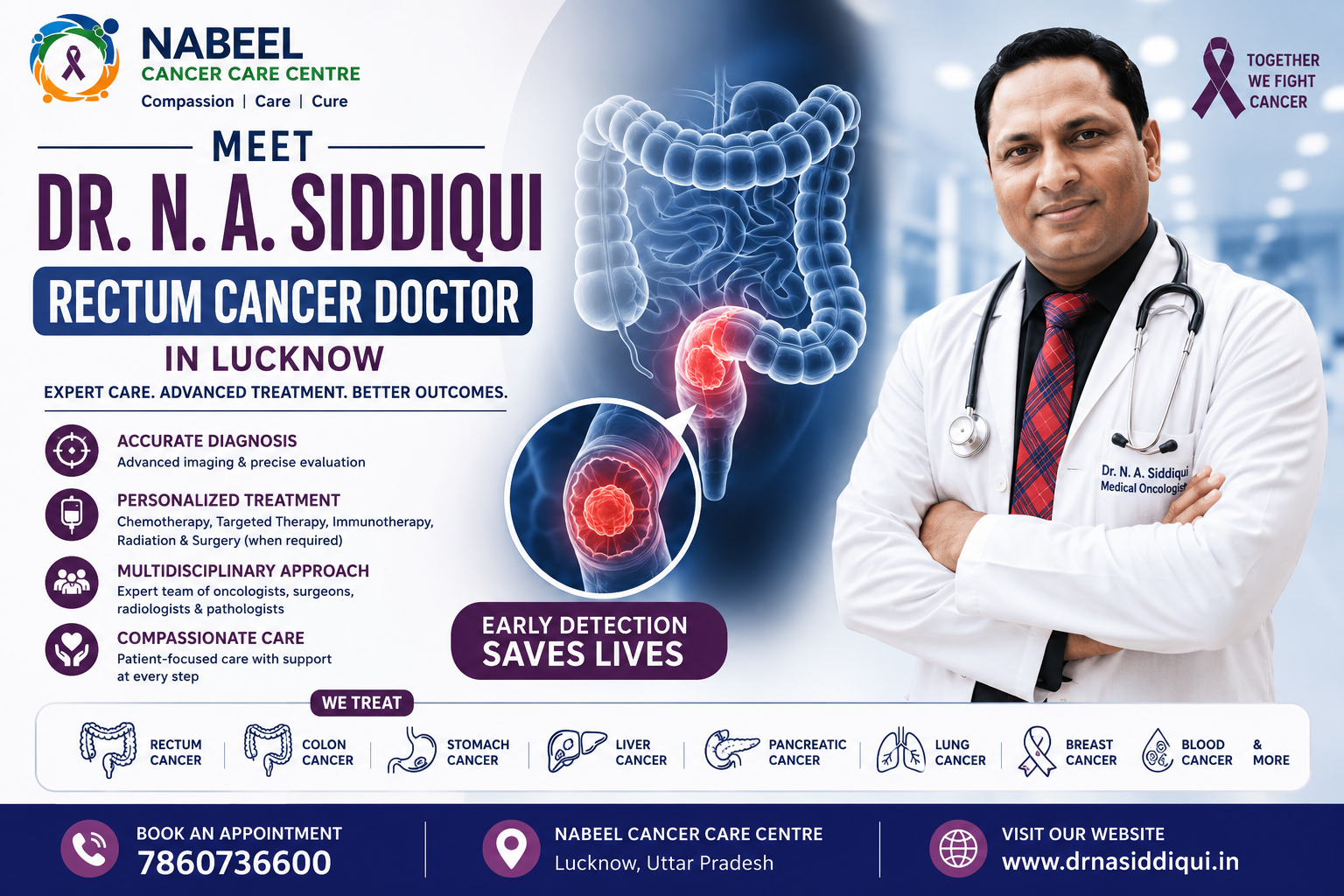
Meet Dr. N. A. Siddiqui — Rectum Cancer Doctor in Lucknow
Rectal cancer is a type of colorectal cancer that develops in the last part of the large intestine, known as the rectum. It is one of the most common gastrointestinal cancers worldwide. Early diagnosis and a personalized treatment plan can significantly improve outcomes.
If you are looking for a Rectum Cancer Doctor in Lucknow, Dr. N. A. Siddiqui, Medical Oncologist at Nabeel Cancer Care Centre, offers evidence-based cancer care with modern treatment options, including chemotherapy, targeted therapy, immunotherapy (when appropriate), and coordinated multidisciplinary management.
About Dr. N. A. Siddiqui
Dr. N. A. Siddiqui is a dedicated Medical Oncologist in Lucknow providing comprehensive treatment for gastrointestinal cancers.
Qualifications
- MBBS
- MD (Medicine)
- DNB (Medical Oncology)
- MRCP (UK)
- ESMO Certified Medical Oncologist
- Certificate in Immuno-Oncology
- PDCR
Areas of Expertise
- Rectal Cancer
- Colon Cancer
- Stomach Cancer
- Pancreatic Cancer
- Liver Cancer
- Esophagus Cancer
- Lung Cancer
- Breast Cancer
- Blood Cancer
- Head & Neck Cancer
Patients receive individualized treatment plans based on international oncology guidelines and multidisciplinary discussions.
What is Rectal Cancer?
Rectal cancer starts in the lining of the rectum, the final section of the large intestine before the anus. Many rectal cancers begin as adenomatous polyps, which can gradually become cancerous if left untreated.
Early detection through screening and prompt treatment can improve the chances of successful management.
Symptoms of Rectal Cancer
The symptoms may vary depending on the stage of the disease.
Common symptoms include:
- Blood in the stool
- Rectal bleeding
- Persistent constipation or diarrhea
- Narrow stools
- Feeling that the bowel does not empty completely
- Pain during bowel movements
- Lower abdominal discomfort
- Fatigue
- Unexplained weight loss
- Loss of appetite
- Anemia due to chronic blood loss
Persistent symptoms should always be evaluated by a healthcare professional.
Causes and Risk Factors
Several factors may increase the risk of rectal cancer.
Increasing Age
The risk increases after the age of 45–50 years.
Family History
Having close relatives with colorectal cancer may increase risk.
Colon Polyps
Certain polyps can develop into cancer if not removed.
Inflammatory Bowel Disease
Long-standing ulcerative colitis or Crohn's disease increases the risk.
Smoking and Tobacco
Smoking is associated with many cancers, including colorectal cancers.
Alcohol Consumption
Heavy alcohol use may increase the risk.
Obesity and Physical Inactivity
Maintaining a healthy lifestyle can help reduce risk.
Diet
A diet high in processed meats and low in fiber may contribute to colorectal cancer risk.
How is Rectal Cancer Diagnosed?
Accurate diagnosis helps determine the best treatment approach.
Colonoscopy
Allows direct visualization of the rectum and colon while enabling biopsy.
Biopsy
Confirms the diagnosis by examining tissue under a microscope.
MRI Pelvis
Essential for staging rectal cancer and planning treatment.
CT Scan
Evaluates whether cancer has spread beyond the pelvis.
PET-CT Scan
Used in selected cases to detect distant disease.
Blood Tests
General health assessment and tumor marker evaluation (such as CEA) may be part of the work-up.
Stages of Rectal Cancer
Stage I
Cancer is limited to the rectal wall.
Stage II
Cancer extends through the rectal wall but has not spread to lymph nodes.
Stage III
Cancer has spread to nearby lymph nodes.
Stage IV
Cancer has spread to distant organs such as the liver or lungs.
Treatment decisions are based on the stage and overall health of the patient.
Advanced Rectal Cancer Treatment in Lucknow
Dr. N. A. Siddiqui offers individualized medical oncology care using current evidence-based practices.
Chemotherapy
Chemotherapy may be given:
- Before surgery (Neoadjuvant)
- After surgery (Adjuvant)
- Along with radiation therapy
- For advanced or metastatic disease
Its goals include shrinking tumors, reducing recurrence risk, and controlling advanced disease.
Targeted Therapy
Targeted therapy may be recommended for selected patients based on molecular testing.
Immunotherapy
Some patients with specific biomarkers, such as MSI-H or dMMR tumors, may benefit from immunotherapy. Eligibility is determined after appropriate evaluation.
Radiation Therapy
Radiation therapy is commonly used before surgery for locally advanced rectal cancer to improve outcomes.
Surgery
Surgery remains an important treatment option for many patients. The surgical approach depends on the location and stage of the tumor and is determined by the surgical team.
Multidisciplinary Cancer Care
Dr. N. A. Siddiqui collaborates with:
- Colorectal Surgeons
- Surgical Oncologists
- Radiation Oncologists
- Gastroenterologists
- Radiologists
- Pathologists
- Nutritionists
- Palliative Care Specialists
This collaborative approach helps ensure comprehensive patient care.
Why Choose Dr. N. A. Siddiqui?
- Personalized treatment planning
- Evidence-based oncology care
- Advanced chemotherapy protocols
- Access to targeted therapy and immunotherapy when appropriate
- Comprehensive supportive care
- Multidisciplinary cancer management
- Compassionate patient-centered approach
Rectal Cancer Treatment Cost in Lucknow
The cost of treatment depends on several factors:
- Stage of cancer
- Diagnostic investigations
- Surgery (if required)
- Chemotherapy regimen
- Radiation therapy
- Targeted therapy
- Immunotherapy
- Hospital stay
- Follow-up care
A consultation is necessary to estimate treatment costs and discuss the most appropriate plan.
Recovery After Rectal Cancer Treatment
Recovery depends on the type of treatment received and the patient's overall health.
Patients may require:
- Regular follow-up visits
- Imaging studies
- Nutritional counseling
- Physical rehabilitation
- Bowel function management
- Emotional and psychological support
Can Rectal Cancer Be Prevented?
Although not every case can be prevented, the following measures may help reduce risk:
- Eat a fiber-rich diet
- Exercise regularly
- Maintain a healthy body weight
- Avoid smoking and tobacco
- Limit alcohol consumption
- Undergo recommended colorectal cancer screening
- Seek medical advice for persistent bowel symptoms
Frequently Asked Questions (FAQs)
Who is the best Rectum Cancer Doctor in Lucknow?
Dr. N. A. Siddiqui is a Medical Oncologist in Lucknow providing diagnosis and medical treatment for rectal cancer.
What are the early signs of rectal cancer?
Blood in the stool, rectal bleeding, changes in bowel habits, abdominal discomfort, unexplained weight loss, and fatigue are common symptoms.
Is rectal cancer curable?
When diagnosed early, many patients can be treated successfully. Treatment outcomes depend on the stage and overall health of the patient.
How is rectal cancer diagnosed?
Diagnosis may include colonoscopy, biopsy, MRI pelvis, CT scan, PET-CT scan, and blood tests.
Is chemotherapy necessary?
Many patients receive chemotherapy as part of their treatment, but the approach depends on the stage and clinical evaluation.
Can immunotherapy help?
Selected patients whose tumors have specific biomarkers may benefit from immunotherapy.
Is surgery always required?
Not always. The need for surgery depends on the stage of disease and the overall treatment strategy.
How long does treatment take?
The duration varies depending on the stage, treatment type, and individual response.
Can rectal cancer come back?
There is a risk of recurrence in some patients. Regular follow-up helps detect recurrence early and manage it promptly.
How can I book an appointment?
You can contact Nabeel Cancer Care Centre or visit the official website to schedule a consultation with Dr. N. A. Siddiqui.
Book an Appointment
If you have symptoms such as rectal bleeding, persistent changes in bowel habits, or have been diagnosed with rectal cancer, consult Dr. N. A. Siddiqui, a trusted Rectum Cancer Doctor in Lucknow, for expert evaluation and a personalized treatment plan.
Early diagnosis, evidence-based treatment, and multidisciplinary care can improve treatment outcomes and quality of life.