
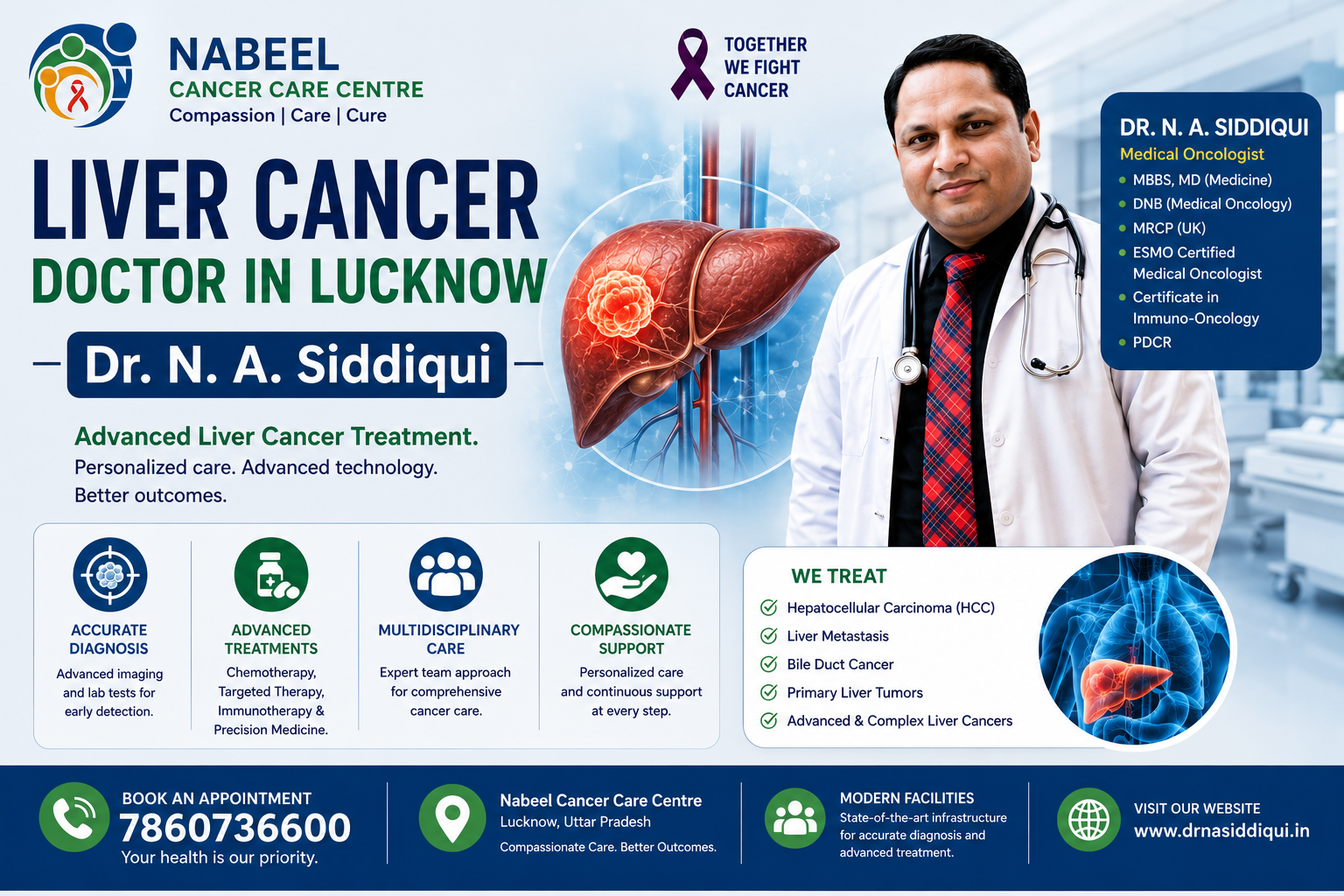
Liver Cancer Doctor in Lucknow – Expert Care by Dr. N. A. Siddiqui
Liver cancer is one of the most serious cancers affecting the digestive system. Early diagnosis, accurate staging, and timely treatment are essential for improving outcomes. Modern oncology offers several treatment options, including chemotherapy, targeted therapy, immunotherapy, and multidisciplinary care tailored to each patient's condition.
If you are searching for a Liver Cancer Doctor in Lucknow, Dr. N. A. Siddiqui, Medical Oncologist at Nabeel Cancer Care Centre, provides evidence-based cancer care with individualized treatment planning. Every patient receives a thorough evaluation, and treatment recommendations are based on the cancer type, stage, liver function, overall health, and current oncology guidelines.
Meet Dr. N. A. Siddiqui
Dr. N. A. Siddiqui is a Medical Oncologist specializing in the diagnosis and medical management of cancer. His approach focuses on personalized care, patient education, and the use of evidence-based therapies.
Qualifications
- MBBS
- MD (Medicine)
- DNB (Medical Oncology)
- MRCP (UK)
- ESMO Certified Medical Oncologist
- Certificate in Immuno-Oncology
- PDCR
At Nabeel Cancer Care Centre, patients receive comprehensive oncology services with a multidisciplinary approach involving surgeons, radiologists, pathologists, and other specialists whenever required.
What is Liver Cancer?
Liver cancer develops when abnormal cells in the liver grow uncontrollably. The most common type is Hepatocellular Carcinoma (HCC), which begins in the main liver cells (hepatocytes). Less commonly, cancer may arise from the bile ducts or spread to the liver from other organs (secondary or metastatic liver cancer).
Primary liver cancer differs from metastatic liver cancer. Determining the exact diagnosis is important because treatment depends on the cancer's origin, stage, and liver function.
Types of Liver Cancer
Hepatocellular Carcinoma (HCC)
The most common form of primary liver cancer in adults.
Intrahepatic Cholangiocarcinoma
A cancer that develops in the bile ducts within the liver.
Angiosarcoma
A rare cancer arising from the blood vessels of the liver.
Secondary (Metastatic) Liver Cancer
Cancer that has spread to the liver from another organ, such as the colon, breast, or lung.
Risk Factors
Several conditions can increase the risk of liver cancer, including:
- Chronic Hepatitis B infection
- Chronic Hepatitis C infection
- Liver cirrhosis
- Fatty liver disease (NAFLD/NASH)
- Excessive alcohol consumption
- Obesity
- Diabetes
- Smoking
- Exposure to aflatoxins
- Family history of liver cancer
Not everyone with these risk factors develops liver cancer, but regular monitoring may be recommended for high-risk individuals.
Symptoms of Liver Cancer
Early-stage liver cancer may not cause noticeable symptoms. As the disease progresses, patients may experience:
- Pain or discomfort in the upper right abdomen
- Unexplained weight loss
- Loss of appetite
- Persistent fatigue
- Abdominal swelling
- Jaundice (yellowing of the skin and eyes)
- Nausea or vomiting
- Fever
- Itching
- Enlarged liver
Persistent symptoms should always be evaluated by a qualified healthcare professional.
When Should You See a Liver Cancer Doctor?
Seek medical evaluation if you have:
- Persistent abdominal pain
- Unexplained weight loss
- Long-standing hepatitis B or C
- Liver cirrhosis
- Yellow discoloration of the eyes
- Abnormal liver imaging reports
- Elevated AFP (Alpha-fetoprotein) levels
- A liver mass detected on ultrasound or CT scan
Early consultation can help determine the cause of these symptoms and guide appropriate treatment.
How Liver Cancer is Diagnosed
A diagnosis of liver cancer may involve:
- Detailed medical history and physical examination
- Blood tests, including liver function tests
- AFP (Alpha-fetoprotein) testing
- Ultrasound of the abdomen
- Contrast-enhanced CT scan
- MRI of the liver
- PET-CT (in selected cases)
- Liver biopsy (when required)
Accurate staging is essential for selecting the most appropriate treatment strategy.
Liver Cancer Staging
Once liver cancer has been diagnosed, the next step is to determine its stage. Staging helps doctors understand the size of the tumor, whether it has spread, and which treatment options are most appropriate. Liver function and the patient's overall health are also important factors when planning treatment.
Stage I
The cancer is confined to the liver and has not spread to nearby blood vessels or lymph nodes.
Stage II
The tumor may have grown into nearby blood vessels or there may be more than one small tumor, but the cancer remains within the liver.
Stage III
The tumor may involve major blood vessels, nearby organs, or multiple areas of the liver.
Stage IV
The cancer has spread to distant organs such as the lungs, bones, or other parts of the body.
In addition to TNM staging, liver cancer treatment often considers liver function using systems such as the Child-Pugh score and BCLC staging.
Liver Cancer Treatment Options
Treatment depends on several factors, including:
- Stage of cancer
- Liver function
- Overall health
- Tumor size and location
- Whether the cancer has spread
- Previous treatments
Dr. N. A. Siddiqui develops individualized treatment plans in coordination with other specialists whenever required.
Surgery
For selected patients with early-stage liver cancer and adequate liver function, surgery may be considered.
Types include:
- Partial liver resection
- Liver transplantation (performed at specialized transplant centers)
Dr. Siddiqui works closely with hepatobiliary surgeons and transplant teams when surgery is appropriate.
Chemotherapy
Chemotherapy uses medicines to destroy or slow the growth of cancer cells. It may be recommended in selected situations, particularly when cancer cannot be removed surgically or as part of a broader treatment plan.
Treatment is personalized based on the patient's condition and current oncology guidelines.
Targeted Therapy
Targeted therapy focuses on specific molecular pathways involved in cancer growth. Some patients with advanced liver cancer may benefit from targeted medicines after evaluation by a medical oncologist.
Eligibility depends on the cancer type, previous treatments, and current clinical recommendations.
Immunotherapy
Immunotherapy helps the immune system recognize and fight cancer cells. It has become an important treatment option for selected patients with advanced liver cancer.
Your oncologist will determine whether immunotherapy is appropriate based on clinical evaluation and treatment guidelines.
Radiation Therapy
Radiation therapy may be recommended in selected situations to help control symptoms or treat specific areas of disease. It is planned by a radiation oncologist as part of multidisciplinary cancer care.
Ablation Therapy
For some small liver tumors, local treatments may be used, including:
- Radiofrequency Ablation (RFA)
- Microwave Ablation (MWA)
These techniques destroy cancer cells using heat and may be suitable for carefully selected patients.
Transarterial Therapies
Some patients may benefit from procedures performed by interventional radiologists, such as:
- Transarterial Chemoembolization (TACE)
- Transarterial Radioembolization (TARE)
These treatments are considered based on tumor characteristics and liver function.
Personalized Cancer Treatment
Every liver cancer patient is different. At Nabeel Cancer Care Centre, treatment planning is personalized based on:
- Cancer stage
- Liver function
- Imaging findings
- Pathology reports
- Molecular testing (when indicated)
- General health
- Patient preferences
This approach helps ensure that care is tailored to individual needs.
Managing Side Effects
Cancer treatment may cause side effects, which vary depending on the treatment used.
Possible side effects include:
- Fatigue
- Nausea
- Reduced appetite
- Diarrhea
- Mouth sores
- Skin changes
- Low blood counts
- Liver function changes
Many side effects can be managed with supportive care, medicines, nutritional guidance, and regular follow-up.
Nutrition During Liver Cancer Treatment
A healthy diet plays an important role during treatment.
General recommendations include:
- Eat small, frequent meals.
- Include protein-rich foods as advised by your healthcare team.
- Stay well hydrated unless otherwise instructed.
- Eat fresh fruits and vegetables after proper washing.
- Limit processed and high-fat foods.
- Avoid alcohol.
- Follow any dietary advice related to your liver condition.
A dietitian may recommend individualized nutrition plans based on your treatment.
Lifestyle Tips
Patients undergoing treatment should consider:
- Avoiding tobacco in all forms
- Limiting alcohol consumption
- Maintaining a healthy weight
- Staying physically active as tolerated
- Getting adequate sleep
- Following prescribed medications
- Attending regular follow-up appointments
These measures support overall health during cancer care.
Follow-Up Care
Regular follow-up is essential after treatment.
It may include:
- Physical examinations
- Blood tests
- Liver function tests
- AFP monitoring (when appropriate)
- CT scan or MRI
- Assessment of treatment response
- Management of treatment-related side effects
The frequency of follow-up depends on the treatment plan and the patient's condition.
Why Choose Dr. N. A. Siddiqui for Liver Cancer Care?
Patients choose Dr. N. A. Siddiqui because of his commitment to evidence-based medical oncology and personalized cancer care.
Highlights
- Individualized treatment planning
- Comprehensive medical oncology services
- Expertise in chemotherapy, immunotherapy, and targeted therapy
- Multidisciplinary coordination with surgeons, radiologists, and radiation oncologists
- Patient-focused counseling and education
- Ongoing supportive care and follow-up
- Compassionate and ethical approach to cancer treatment
At Nabeel Cancer Care Centre, patients receive coordinated care designed to support them through diagnosis, treatment, and follow-up.
Frequently Asked Questions (FAQs)
1. Who is the best Liver Cancer Doctor in Lucknow?
Dr. N. A. Siddiqui is a Medical Oncologist in Lucknow who provides evidence-based treatment for liver cancer, including chemotherapy, immunotherapy, targeted therapy, and personalized cancer care.
2. What are the early symptoms of liver cancer?
Early symptoms may include fatigue, loss of appetite, unexplained weight loss, abdominal discomfort, nausea, and weakness. Some patients may not experience symptoms in the early stages.
3. Can liver cancer be cured?
Some patients with early-stage liver cancer may be eligible for treatments such as surgery or liver transplantation. Treatment options depend on the stage of the disease, liver function, and the patient's overall health.
4. Is liver cancer treatable without surgery?
Yes. Depending on the individual case, treatment may include chemotherapy, immunotherapy, targeted therapy, radiation therapy, or local treatments such as ablation or embolization.
5. What causes liver cancer?
Risk factors include chronic hepatitis B or C infection, liver cirrhosis, fatty liver disease, excessive alcohol use, obesity, diabetes, and smoking.
6. Is liver cancer hereditary?
Most liver cancers are not inherited, although some genetic conditions and family history may increase the risk.
7. What tests diagnose liver cancer?
Diagnosis may include blood tests, AFP testing, ultrasound, CT scan, MRI, PET-CT (when indicated), and biopsy in selected cases.
8. Is chemotherapy effective for liver cancer?
Chemotherapy may be recommended in selected situations. The treatment plan depends on the cancer stage and overall clinical condition.
9. What is targeted therapy for liver cancer?
Targeted therapy uses medicines that block specific pathways involved in cancer growth. It is suitable only for selected patients based on current treatment guidelines.
10. What is immunotherapy?
Immunotherapy helps the body's immune system recognize and fight certain cancers. It may be recommended for selected liver cancer patients.
11. How long does liver cancer treatment take?
Treatment duration varies depending on the cancer stage, treatment type, and individual response.
12. What foods should liver cancer patients eat?
A balanced diet with adequate protein, hydration, fruits, vegetables, and dietitian-guided nutrition is generally recommended.
13. Should liver cancer patients avoid alcohol?
Yes. Alcohol can further damage the liver and is generally avoided during treatment.
14. Can liver cancer spread?
Yes. Advanced liver cancer can spread to other organs. Early diagnosis and treatment are important.
15. Is liver cancer painful?
Some patients experience pain in the upper right abdomen, while others may not have pain in the early stages.
16. Can fatty liver cause liver cancer?
Fatty liver disease may increase the risk of liver cancer, especially if it progresses to cirrhosis.
17. What is AFP?
AFP (Alpha-Fetoprotein) is a blood marker that may help in the diagnosis and monitoring of some liver cancers.
18. When should I see an oncologist?
Consult an oncologist if imaging, blood tests, or symptoms suggest liver cancer or if you have been referred after a diagnosis.
19. What are the treatment side effects?
Side effects vary depending on the treatment. Your oncology team will discuss expected side effects and supportive care options.
20. How do I book an appointment with Dr. N. A. Siddiqui?
You can contact Nabeel Cancer Care Centre to schedule a consultation.