
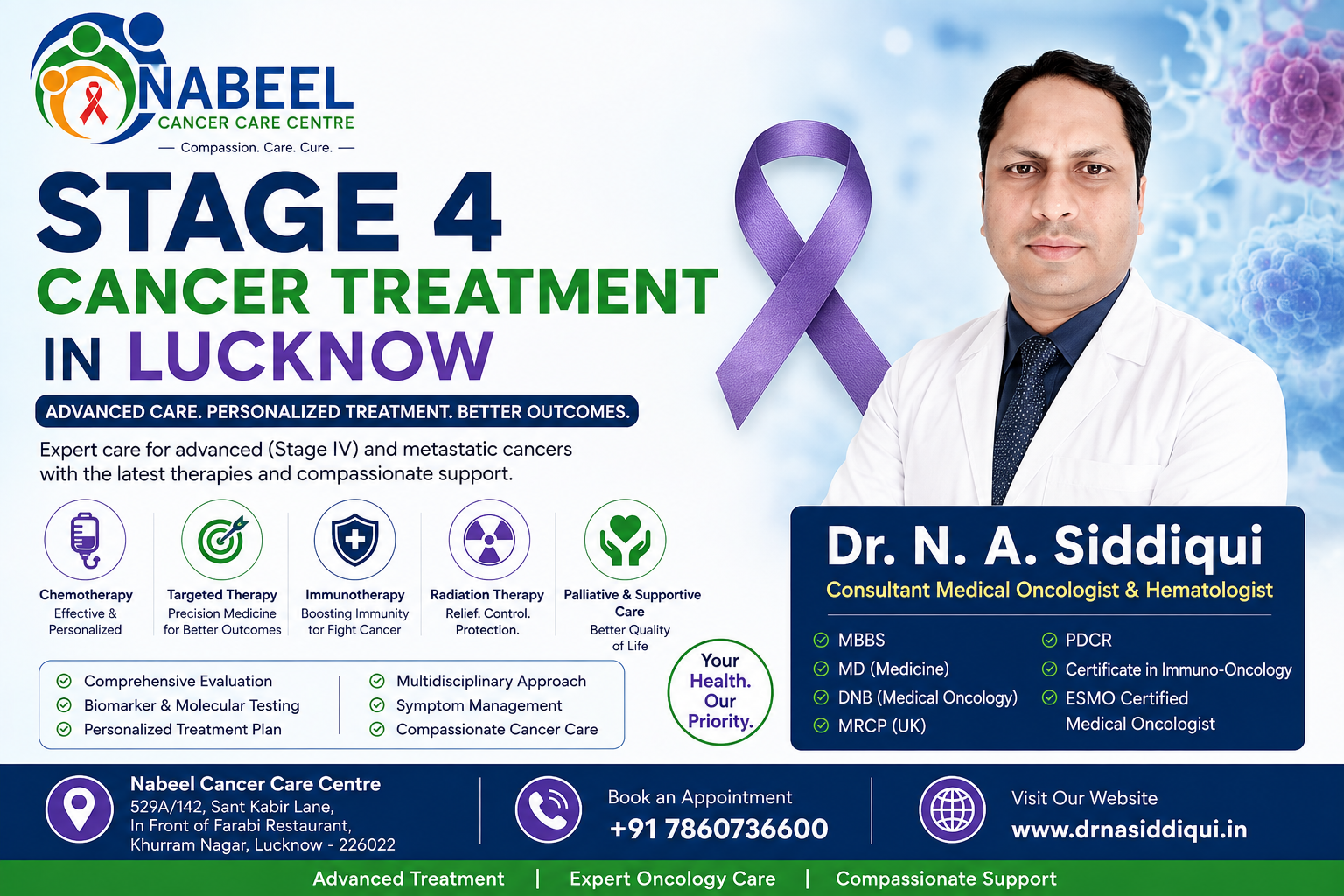
Stage 4 Cancer Treatment in Lucknow – Dr. N. A. Siddiqui
A diagnosis of Stage 4 cancer can be emotionally overwhelming for patients and their families. It often leads to urgent questions: Can Stage 4 cancer still be treated? Is chemotherapy the only option? Can immunotherapy or targeted therapy help? Should molecular testing be done? How will doctors know if treatment is working?
The most important thing to understand is that Stage 4 cancer is not one single disease and does not have one standard treatment for every patient.
Treatment depends on the cancer's original site, pathology, extent of spread, molecular or biomarker characteristics, previous treatment, symptoms, general health and individual treatment goals.
If you are looking for Stage 4 Cancer Treatment in Lucknow, Dr. N. A. Siddiqui, Consultant Medical Oncologist & Hematologist, provides individualized medical oncology evaluation and treatment planning for patients with advanced and metastatic cancers.
Modern Stage 4 cancer care may involve chemotherapy, immunotherapy, targeted therapy, hormone therapy, radiation therapy, selected local treatments, supportive care and palliative care. Some patients may receive one treatment while others require a combination or sequential therapies.
What Does Stage 4 Cancer Mean?
Cancer staging describes how extensive a cancer is within the body.
For many solid cancers, Stage IV or Stage 4 means the cancer has spread to a distant part of the body away from where it originally started.
This distant spread is commonly called metastasis.
For example:
- Breast cancer that spreads to the bones is metastatic breast cancer.
- Lung cancer that spreads to the brain remains lung cancer.
- Colon cancer that spreads to the liver remains colon cancer.
- Prostate cancer that spreads to bone remains prostate cancer.
The cancer is named and treated according to its original or primary site, not according to the organ where it later spreads.
It is also important to understand that staging systems are not identical for every cancer. Some cancers use disease-specific staging systems, and blood cancers may be classified differently.
Therefore, treatment cannot be decided simply from the words “Stage 4.”
Is Stage 4 Cancer Treatable?
Yes. Many Stage 4 cancers have treatment options.
However, the goals and expected benefits of treatment differ considerably between cancer types and individual patients.
For many metastatic cancers, treatment may aim to:
- Control cancer growth
- Reduce the size of tumors
- Delay progression
- Relieve cancer-related symptoms
- Prevent complications
- Maintain physical function
- Improve or preserve quality of life
- Prolong survival where treatment is effective
Some metastatic cancers can remain controlled for a long period with appropriate treatment.
In selected situations, certain cancers with limited metastatic spread may also be treated more aggressively using systemic treatment together with surgery or focused radiation.
It is therefore inappropriate to assume that every patient with Stage 4 cancer has the same prognosis.
A patient's outlook depends on multiple factors, including:
- Primary cancer type
- Tumor biology
- Sites and extent of spread
- Biomarker profile
- General health
- Response to treatment
- Available treatment options
First Step: Confirm the Diagnosis and Stage
Before deciding on treatment, the oncology team needs to understand exactly what type of cancer is present and how extensive it is.
Evaluation may include:
- Medical history and examination
- Biopsy
- Histopathology
- Immunohistochemistry
- CT scan
- MRI
- PET-CT where appropriate
- Bone imaging where indicated
- Blood investigations
- Liver and kidney function testing
- Molecular testing
- Biomarker testing
A pathology report is particularly important because treatment may differ substantially between different subtypes of cancer arising in the same organ.
Is Another Biopsy Sometimes Needed?
Not every patient requires another biopsy after Stage 4 disease is identified.
However, a repeat or metastatic-site biopsy may sometimes be considered when:
- The diagnosis is uncertain
- There is insufficient tissue for testing
- Cancer returns after a long period
- Tumor biology may have changed
- Molecular testing is required
- Treatment selection depends on additional pathology information
The decision should be individualized.
Biomarker and Molecular Testing in Stage 4 Cancer
One of the major advances in modern cancer treatment is the ability to examine the molecular characteristics of individual tumors.
Biomarker testing looks for genes, proteins or other features within cancer that may influence treatment selection.
For advanced cancers, testing may sometimes identify patients who could benefit from a specific:
- Targeted therapy
- Immunotherapy
- Hormone-based treatment
- Other biomarker-directed treatment
Examples of biomarkers relevant to selected cancers may include:
- EGFR
- ALK
- ROS1
- KRAS
- BRAF
- HER2
- BRCA-related alterations
- MSI/MMR
- PD-L1
- Other disease-specific molecular changes
However, these tests are not interchangeable.
A patient with lung cancer may require a very different biomarker panel from someone with breast, colon or ovarian cancer.
Finding a mutation also does not automatically mean that a matching drug will be effective.
The result must be interpreted by a medical oncologist in the context of the complete clinical picture.
Stage 4 Cancer Treatment Options in Lucknow
The treatment of Stage 4 cancer is increasingly personalized.
Chemotherapy
Chemotherapy uses anti-cancer medicines that can travel through the bloodstream and reach cancer cells in different parts of the body.
For this reason, chemotherapy remains an important systemic treatment for many advanced cancers.
Depending on the diagnosis, chemotherapy may help:
- Shrink tumors
- Slow cancer progression
- Reduce symptoms
- Control disease
- Improve outcomes in appropriately selected patients
The chemotherapy regimen depends primarily on the cancer type rather than simply the stage.
For example, chemotherapy used for Stage 4 breast cancer differs from regimens used for lung, colorectal, ovarian or pancreatic cancer.
Before treatment, the oncologist may consider:
- Previous chemotherapy
- Blood counts
- Kidney function
- Liver function
- Heart function where relevant
- General fitness
- Other medical conditions
- Potential benefits and risks
Treatment is then monitored regularly.
Immunotherapy for Stage 4 Cancer
Immunotherapy helps the immune system recognize or attack cancer more effectively.
A widely used form of immunotherapy involves immune checkpoint inhibitors, which can block signals that cancer cells may use to suppress immune responses.
Immunotherapy has become an important treatment option for selected patients with cancers such as:
- Lung cancer
- Kidney cancer
- Bladder cancer
- Melanoma
- Head and neck cancer
- Certain gastrointestinal cancers
- Other appropriately selected tumors
However, immunotherapy is not appropriate for every Stage 4 cancer.
Selection may depend on:
- Cancer type
- Biomarker results
- Previous treatments
- Overall health
- Autoimmune conditions
- Potential treatment risks
Immunotherapy can also cause immune-related side effects, so treatment requires clinical monitoring.
Targeted Therapy
Targeted therapy is designed to interfere with specific proteins, genes or molecular pathways involved in cancer growth.
These medicines are particularly relevant when testing identifies a clinically actionable target.
Targeted therapy may be used in selected patients with:
- Lung cancer
- Breast cancer
- Colorectal cancer
- Kidney cancer
- Ovarian cancer
- Some blood cancers
- Other biomarker-defined tumors
Because targeted treatments act against particular cancer characteristics, molecular testing is often required before therapy is selected.
Hormone Therapy
Some cancers depend on hormones for growth.
Hormone therapy can therefore play a major role in selected cases of:
Metastatic Breast Cancer
Hormone-sensitive breast cancers may be treated with endocrine therapy, sometimes combined with targeted medicines.
Advanced Prostate Cancer
Hormonal treatment is an important component of therapy for many patients with metastatic prostate cancer and may be combined with other medicines depending on the disease.
Hormone therapy is not used for every cancer.
Radiation Therapy in Stage 4 Cancer
Stage 4 cancer treatment is not limited to systemic medicines.
Radiation therapy may sometimes be used to treat specific areas causing symptoms or posing a risk of complications.
Radiation may help in situations such as:
- Painful bone metastases
- Certain brain metastases
- Tumor-related bleeding
- Pressure on nearby tissues
- Selected spinal metastases
- Other symptomatic cancer sites
In selected cases, highly focused radiation may also be considered for a limited number of metastatic lesions.
Radiation treatment is generally coordinated with a radiation oncologist.
Is Surgery Possible in Stage 4 Cancer?
Stage 4 cancer does not automatically mean surgery can never be performed.
However, surgery is not appropriate for every patient.
It may sometimes be considered to:
- Relieve obstruction
- Control bleeding
- Manage complications
- Treat selected primary tumors
- Remove limited metastatic disease in carefully selected cases
Whether surgery provides meaningful benefit depends on the cancer type, location and extent of disease and response to systemic treatment.
Such decisions are best made through a multidisciplinary approach.
What Is Oligometastatic Stage 4 Cancer?
Not all metastatic cancers involve widespread disease.
Some patients have only a limited number of metastatic sites, sometimes described as oligometastatic disease.
For carefully selected patients, treatment may combine:
- Systemic therapy
- Surgery
- Stereotactic radiation
- Other local approaches
This does not mean that every patient with limited metastases can be cured.
Rather, it is a specialized treatment concept that may be appropriate for certain cancer types and clinical situations after careful multidisciplinary assessment.
Treatment Depends on the Type of Stage 4 Cancer
The phrase “Stage 4 cancer” alone is not enough to choose therapy.
Stage 4 Breast Cancer
Treatment may include:
- Hormone therapy
- Chemotherapy
- HER2-directed therapy
- Other targeted therapies
- Immunotherapy in selected cases
Treatment depends heavily on ER, PR and HER2 status and other tumor characteristics.
Stage 4 Lung Cancer
Treatment may include:
- Targeted therapy
- Immunotherapy
- Chemotherapy
- Combination chemo-immunotherapy
- Radiation for selected sites
Molecular testing and immune biomarkers can play an important role, especially in non-small cell lung cancer.
Stage 4 Colorectal Cancer
Treatment can involve:
- Chemotherapy
- Targeted therapy
- Immunotherapy for selected biomarker-defined tumors
- Surgery or focused treatment for selected liver or lung metastases
Stage 4 Prostate Cancer
Treatment may include:
- Hormonal therapy
- Androgen-receptor pathway treatments
- Chemotherapy
- Other systemic treatments
- Bone-directed or radiation therapy where appropriate
Stage 4 Kidney Cancer
Modern systemic therapy may involve immunotherapy, targeted therapy or combinations depending on the clinical situation.
Stage 4 Ovarian Cancer
Treatment commonly involves multidisciplinary assessment and may include surgery and systemic chemotherapy, with targeted maintenance strategies for selected patients.
Every cancer therefore needs a disease-specific treatment plan rather than a generic Stage 4 protocol.
How Do Doctors Know Whether Treatment Is Working?
Treatment response is assessed at appropriate intervals.
Monitoring may include:
- Clinical examination
- Symptoms and performance status
- Blood tests
- CT scans
- MRI scans
- PET-CT in selected situations
- Disease-specific tumor markers where useful
- Organ-function tests
The oncology team may describe the disease as:
Responding
Tumors have decreased or other evidence suggests treatment benefit.
Stable
The cancer has not shown meaningful progression.
Progressive
The cancer has grown or new disease has appeared.
If treatment is working and side effects remain manageable, it may continue.
If cancer progresses, the next treatment decision may include another systemic therapy, a targeted treatment, immunotherapy, radiation, supportive care or consideration of a clinical trial where appropriate.
Supportive and Palliative Care for Stage 4 Cancer
One of the most important misconceptions about advanced cancer is that palliative care means treatment has stopped.
It does not.
Palliative care can be given alongside active cancer treatment.
Its goal is to prevent or reduce symptoms, treatment side effects and other problems affecting quality of life.
Supportive care may address:
- Pain
- Nausea and vomiting
- Fatigue
- Reduced appetite
- Constipation
- Breathlessness
- Sleep problems
- Anxiety
- Nutritional difficulties
- Treatment-related weakness
- Emotional concerns
Cancer-directed treatment and symptom-directed care should work together when appropriate.
Stage 4 Cancer and Second Opinion
A second medical oncology opinion can be useful after a Stage 4 diagnosis, especially when:
- The diagnosis is new
- Pathology is complex
- Multiple treatments are available
- Molecular testing has not been discussed
- Immunotherapy is being considered
- Targeted therapy is being considered
- Cancer has progressed despite treatment
- A major change in therapy is being recommended
The second oncologist can review existing records rather than automatically repeating every investigation.
Bring previous:
- Pathology reports
- Biopsy results
- PET-CT, CT or MRI reports
- Imaging CDs
- Molecular testing
- Chemotherapy records
- Immunotherapy records
- Radiation details
- Surgery records
Internal Link: Cancer Second Opinion in Lucknow
Questions to Ask Your Medical Oncologist
Patients and families may find it useful to ask:
- What exact type of cancer do I have?
- Where has the cancer spread?
- What is the goal of my treatment?
- What treatment options are available?
- Do I need molecular or biomarker testing?
- Could targeted therapy be suitable?
- Could immunotherapy be suitable?
- What benefit can realistically be expected?
- What side effects should I watch for?
- How will we measure treatment response?
- What happens if this treatment stops working?
- Should I consider a second opinion or clinical trial?
Clear communication about the goal of treatment is especially important in advanced cancer.
About Dr. N. A. Siddiqui – Medical Oncologist in Lucknow
Dr. N. A. Siddiqui is a Consultant Medical Oncologist & Hematologist practicing in Lucknow.
Qualifications
- MBBS
- MD (Medicine)
- DNB (Medical Oncology)
- MRCP (UK)
- PDCR
- Certificate in Immuno-Oncology
- ESMO Certified Medical Oncologist
His oncology practice includes treatment planning involving:
- Chemotherapy
- Immunotherapy
- Targeted therapy
- Hormone therapy
- Advanced and metastatic cancer management
- Biomarker-guided treatment evaluation
- Treatment monitoring
- Supportive oncology care
- Cancer second opinion
At Nabeel Cancer Care Centre, treatment decisions are individualized according to the primary cancer, stage, pathology, molecular features where relevant, previous therapy and patient's general medical condition.
Why Consult a Medical Oncologist for Stage 4 Cancer?
Advanced cancer often requires systemic treatment that can reach cancer cells throughout the body.
A medical oncologist can help integrate:
Diagnosis
Confirming the exact cancer type and pathology.
Staging
Understanding the extent and location of disease.
Tumor Biology
Assessing biomarkers or molecular findings where clinically relevant.
Treatment Selection
Considering chemotherapy, targeted therapy, immunotherapy, hormone therapy and combinations.
Treatment Monitoring
Evaluating response and managing side effects.
Multidisciplinary Care
Coordinating with radiation oncologists, surgeons, radiologists, pathologists and supportive-care teams when necessary.
Frequently Asked Questions About Stage 4 Cancer
Can Stage 4 cancer be treated?
Yes. Treatment is available for many Stage 4 cancers. The treatment goal and expected benefit depend on the primary cancer, tumor biology, extent of disease and patient's general health.
Is Stage 4 cancer always terminal?
No single statement applies to every Stage 4 cancer. Many metastatic cancers are not considered curable with current treatments, but some can be controlled for prolonged periods. Selected cancers and patients may have substantially different outcomes.
Is Stage 4 cancer the same as metastatic cancer?
For many solid cancers, Stage IV indicates distant metastatic spread. However, staging systems vary between different cancers, so the terms should not be assumed to be identical in every disease.
Does every Stage 4 cancer patient need chemotherapy?
No. Depending on the cancer, treatment may involve chemotherapy, targeted therapy, immunotherapy, hormone therapy, radiation therapy or combinations of treatments.
Can immunotherapy treat Stage 4 cancer?
Immunotherapy is an important treatment for selected advanced cancers, but it is not suitable for every patient. Cancer type, biomarkers and clinical factors influence treatment selection.
Can targeted therapy be used in Stage 4 cancer?
Yes, when a cancer has a relevant target for which an effective therapy is available. Biomarker or molecular testing may therefore be recommended in selected advanced cancers.
Can a person live for years with Stage 4 cancer?
Some patients can live for years with metastatic cancer that remains controlled. However, individual outcomes vary widely and should be discussed with the treating oncologist rather than predicted from the stage alone.
Should I take a second opinion after a Stage 4 diagnosis?
It can be helpful, particularly when the diagnosis is new, several treatment options exist, biomarker testing is relevant or you want another specialist to review the proposed treatment plan.
Consult Dr. N. A. Siddiqui for Stage 4 Cancer Treatment in Lucknow
A Stage 4 diagnosis requires careful assessment rather than a one-size-fits-all treatment approach.
If you are seeking Stage 4 Cancer Treatment in Lucknow, Dr. N. A. Siddiqui provides medical oncology consultation for advanced and metastatic cancers, including evaluation for chemotherapy, immunotherapy, targeted therapy, hormone therapy, biomarker-guided treatment, supportive cancer care and second opinion where clinically appropriate.
Dr. N. A. Siddiqui
Consultant Medical Oncologist & Hematologist
MBBS, MD (Medicine)
DNB (Medical Oncology)
MRCP (UK), PDCR
Certificate in Immuno-Oncology
ESMO Certified Medical Oncologist
Nabeel Cancer Care Centre
529A/142, Sant Kabir Lane, In Front of Farabi Restaurant,
Khurram Nagar, Lucknow
Appointment: +91 7860736600
Website: www.drnasiddiqui.in
BOOK A STAGE 4 CANCER CONSULTATION
Medical Disclaimer
This page is intended for general educational purposes only. It does not provide an individual diagnosis, prognosis or treatment recommendation. Stage 4 cancer treatment varies substantially according to cancer type, biology, extent of disease, previous treatment and patient health. Decisions should be made after consultation with qualified cancer specialists.