

Prostate Cancer Expertise by Dr N.A. Siddiqui
January 9, 2025
Why Dr. N. A. Siddiqui Is a Trusted Cancer Specialist in Lucknow?
July 13, 2026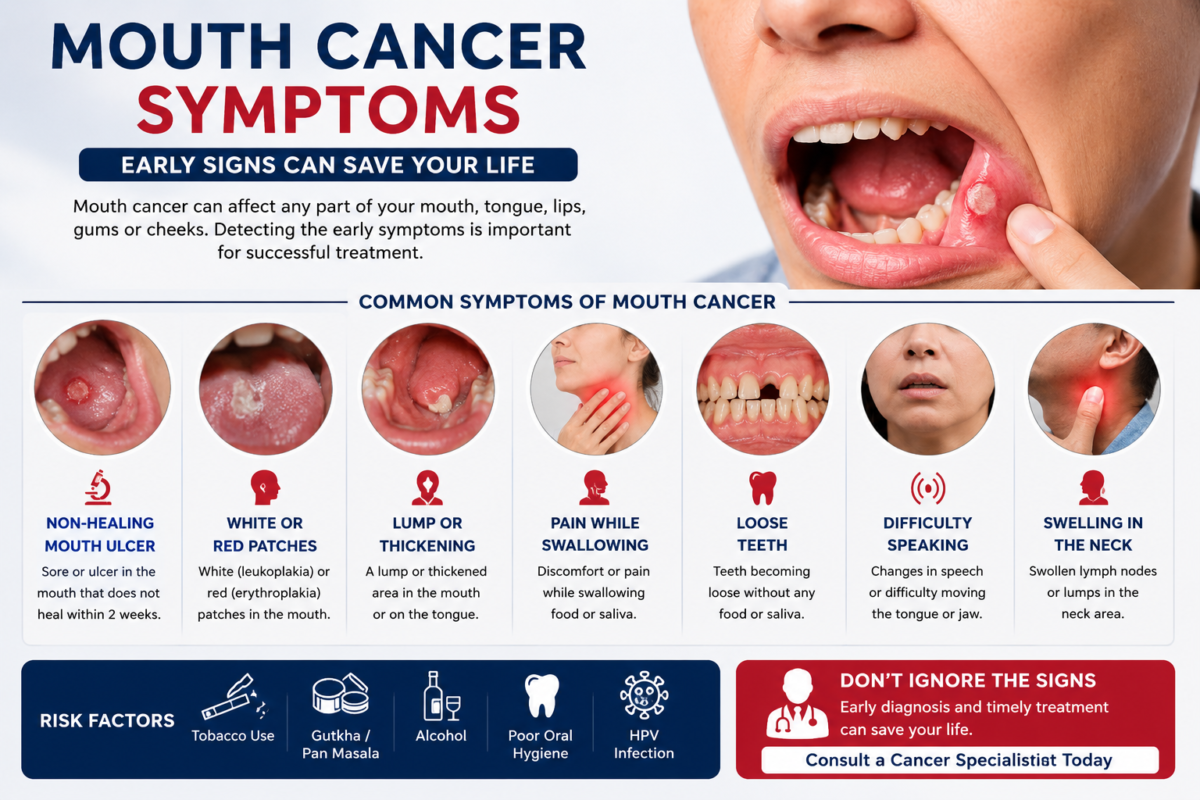
Mouth cancer is one of the most common types of cancer affecting the oral cavity. It can develop in the lips, tongue, gums, inner cheeks, roof of the mouth, or floor of the mouth. Early detection of mouth cancer symptoms significantly improves treatment outcomes and survival rates.
Many people ignore the initial signs, assuming they are minor mouth ulcers or infections. However, symptoms that persist for more than two weeks should never be overlooked.
What is mouth cancer?
Mouth cancer, also known as oral cancer, occurs when abnormal cells grow uncontrollably in any part of the oral cavity. It is a type of head and neck cancer that can spread to nearby tissues and lymph nodes if not diagnosed early.
Common Mouth Cancer Symptoms
Recognising the early signs of mouth cancer can help in timely diagnosis and treatment.
1. Non-Healing Mouth Ulcer
One of the most common symptoms is a sore or ulcer in the mouth that does not heal within two weeks.
Signs include:
- Persistent ulcer
- Pain or irritation
- Recurrent bleeding
- Ulcer increasing in size
2. White or Red Patches in the Mouth
Abnormal white patches (Leukoplakia) or red patches (Erythroplakia) may indicate precancerous changes.
These patches can appear on:
- Tongue
- Gums
- Inner cheeks
- Floor of the mouth
3. Lump or Thickening in the Mouth
A lump inside the mouth or on the tongue should always be evaluated by a specialist, especially if it persists for several weeks.
4. Pain While Swallowing
Difficulty or pain during swallowing can be a warning sign, particularly when accompanied by a persistent sore throat.
5. Persistent Mouth Pain
Continuous pain without a clear dental cause may indicate oral cancer.
6. Loose Teeth
Unexpected loosening of teeth without gum disease may occur when cancer affects surrounding tissues.
7. Difficulty Speaking
Changes in speech, tongue movement, or jaw function can develop as the disease progresses.
8. Ear Pain
Pain in one ear without any ear infection can sometimes be linked to oral cancer.
9. Bad Breath
Persistent bad breath despite maintaining oral hygiene may be associated with oral health problems, including cancer.
10. Swelling in the Neck
Cancer can spread to nearby lymph nodes, causing swelling or lumps in the neck.
Early Signs of Mouth Cancer
The earliest symptoms often include:
- Small non-healing ulcer
- White patch on tongue
- Red patch inside mouth
- Mild pain while eating
- Burning sensation in the mouth
- Slight thickening of oral tissues
Early-stage mouth cancer may be painless, which is why regular oral examinations are important.
Causes of Mouth Cancer
Several factors increase the risk of developing oral cancer.
Tobacco Use
Smoking cigarettes, bidis, cigars, and chewing tobacco are major risk factors.
Gutkha and Pan Masala
Regular use of gutkha, khaini, zarda, and pan masala significantly increases the risk of oral cancer.
Alcohol Consumption
Heavy alcohol consumption can damage oral tissues and increase cancer risk.
HPV Infection
Certain strains of Human Papillomavirus (HPV) have been associated with oral cancers.
Poor Oral Hygiene
Chronic irritation, sharp teeth, and poor dental hygiene may contribute to the development of oral cancer.
Who is at Risk?
You may have a higher risk if you:
- Use tobacco products
- Consume alcohol regularly
- Are above 40 years of age
- Have HPV infection
- Have a family history of cancer
- Have chronic mouth ulcers
When Should You See a Cancer Specialist?
Consult a cancer specialist immediately if you notice:
- A mouth ulcer lasting more than two weeks
- White or red patches
- Difficulty swallowing
- Lump in the mouth
- Neck swelling
- Persistent oral pain
Early consultation can lead to earlier diagnosis and better treatment outcomes.
How is Mouth Cancer Diagnosed?
A specialist may recommend:
Clinical Examination
Detailed examination of the oral cavity.
Biopsy
A small tissue sample is taken for laboratory analysis.
Imaging Tests
- CT Scan
- MRI
- PET-CT Scan
These tests help determine the stage and spread of cancer.
Mouth Cancer Treatment Options
Treatment depends on the stage and location of the cancer.
Surgery
Removal of cancerous tissue.
Radiation Therapy
High-energy radiation destroys cancer cells.
Chemotherapy
Cancer-fighting medicines are used to destroy cancer cells.
Immunotherapy
Advanced treatment that helps the immune system fight cancer.
Targeted Therapy
Drugs specifically target cancer cells while minimizing damage to healthy cells.
Can Mouth Cancer Be Cured?
Yes. Mouth cancer is highly treatable when detected early. Patients diagnosed in the early stages generally have significantly better treatment outcomes compared to advanced-stage disease.
Regular dental check-ups, avoiding tobacco products, and early medical consultation are essential for prevention and early detection.
Tips to Prevent Mouth Cancer
- Avoid tobacco and gutkha
- Limit alcohol consumption
- Maintain good oral hygiene
- Eat a healthy diet rich in fruits and vegetables
- Get regular dental check-ups
- Seek medical advice for persistent oral lesions
Frequently Asked Questions
What is the first symptom of mouth cancer?
A non-healing mouth ulcer is often the first noticeable symptom.
Can mouth cancer start as a small ulcer?
Yes. Many cases begin as a persistent ulcer that does not heal.
Are white patches in the mouth cancerous?
Not all white patches are cancerous, but they should be evaluated by a specialist.
How long should a mouth ulcer last before seeing a doctor?
Any ulcer lasting more than two weeks should be examined by a healthcare professional.
Is mouth cancer curable?
Yes, especially when diagnosed and treated in the early stages.
Call to Action
Experiencing persistent mouth ulcers, white patches, or difficulty swallowing? Don’t ignore these warning signs. Schedule a consultation with Dr. N. A. Siddiqui, an experienced Medical Oncologist in Lucknow, for expert evaluation and personalized cancer care.